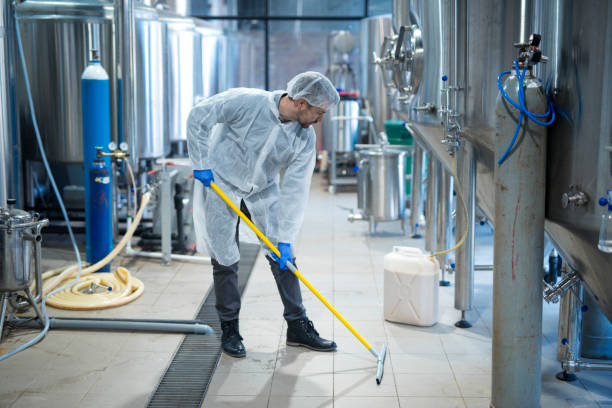
Manufacturing plants, processing facilities and heavy industrial sites operate on a different level entirely compared to a typical office or retail space. Machinery runs continuously, materials range from harmless dust to genuinely hazardous residue, and the physical scale of these sites can stretch across thousands of square metres. Cleaning an environment like this is not simply a bigger version of a standard commercial clean. It is a distinct discipline with its own equipment, training and safety requirements.
For facility managers, understanding this distinction matters. Treating industrial cleaning as an extension of general office cleaning is one of the most common and costly mistakes an operator can make.
The Unique Demands of Industrial Environments
Industrial sites often deal with substances that require careful, informed handling. Oil residue, metal shavings, chemical byproducts and heavy dust accumulation are common across manufacturing and processing facilities. Standard cleaning products and techniques are frequently inadequate, or in some cases unsafe, when applied to these conditions.
Equipment presents its own challenges too. Machinery often needs to be cleaned around, rather than simply cleaned over, requiring an understanding of shutdown procedures, lockout protocols and equipment sensitivity. A team unfamiliar with these considerations risks damaging expensive machinery or, worse, creating a genuine safety hazard for staff working nearby.
Why Specialist Training Matters So Much
Professionals who deliver Industrial Cleaning Sydney facilities depend on typically undergo training that goes well beyond general cleaning competency. This includes handling of hazardous materials, correct use of personal protective equipment, and an understanding of relevant workplace health and safety legislation specific to industrial environments.
This training becomes particularly important in facilities that handle chemicals, food processing, or heavy manufacturing, where an incorrectly cleaned surface or improperly disposed of substance could create genuine risk. Reputable providers will be able to clearly explain their safety protocols and staff training standards without hesitation, since these are not optional extras but core parts of doing the job properly.
The Equipment Difference
Standard mops and vacuum cleaners are simply not built for industrial scale grime. Effective Industrial Cleaning Sydney operators typically rely on high powered pressure washing equipment, industrial degreasers formulated for specific residues, ride on floor scrubbers capable of covering large factory floors efficiently, and specialised extraction equipment for handling fine dust or particulate matter safely.
Choosing the correct equipment and product combination for each specific type of industrial residue is a skill in itself. Using the wrong approach can smear grease rather than remove it, or fail to properly capture fine particulates that pose a respiratory risk if simply swept into the air.
Maintenance of the cleaning equipment itself also matters more in industrial settings than most people realise. Pressure washers, scrubbers and extraction units used across heavy duty sites face far more wear than equipment used in a standard office, and a provider who neglects their own equipment maintenance will eventually see performance and reliability suffer, often at the worst possible moment during a scheduled clean.
Compliance, Audits and Reputation
Many industrial facilities operate under strict regulatory oversight, whether related to food safety, environmental protection or workplace health and safety. A properly documented cleaning program delivered by an experienced industrial cleaning partner supports compliance during audits and inspections, providing a clear record of maintenance standards over time.
Beyond compliance, cleanliness in an industrial setting also reflects directly on operational reputation. Clients conducting site visits, auditors assessing certification, and even prospective staff touring a facility all form impressions based partly on how well maintained the site appears. A visibly well kept plant signals a business that takes its operations seriously across the board.
Scheduling Around Continuous Operations
Many industrial sites run around the clock, or close to it, which means cleaning cannot simply happen after everyone has gone home for the night. Scheduling has to work around shift changes, production runs and maintenance windows, often requiring crews to clean specific zones while other parts of the facility continue operating at full capacity nearby.
This kind of coordination demands strong communication between the cleaning team and site supervisors, along with a clear understanding of which areas are safe to access at any given time. A provider experienced in Industrial Cleaning Sydney facilities depend on will typically work closely with operations managers to build a schedule that keeps the site clean without ever compromising productivity or safety.
Environmental and Waste Handling Obligations
Industrial cleaning often produces its own waste stream that needs careful handling, from used rags contaminated with oil to wastewater generated during pressure washing. Many of these byproducts fall under environmental regulations that dictate how they must be stored, transported and disposed of.
A responsible cleaning provider understands these obligations and builds them into their standard operating procedures, protecting the client facility from potential environmental breaches that could otherwise result in significant fines or reputational damage.
Building a Long Term Maintenance Partnership
The most effective industrial cleaning relationships tend to develop over time, as a provider becomes genuinely familiar with a facility’s layout, equipment and specific risk areas. This familiarity allows a cleaning team to spot early warning signs, such as an unusual oil leak or a build up of material near a piece of machinery, that a less experienced or unfamiliar crew might simply clean around without flagging.
Facility managers who invest in a consistent, long term cleaning partnership rather than rotating between low cost providers often find that this familiarity pays dividends beyond cleanliness alone, contributing to a broader culture of proactive maintenance and hazard awareness across the site.
Final Thoughts
Industrial facilities cannot afford to treat cleaning as a generic, low priority task handed to whichever provider offers the lowest quote. The stakes involved, from worker safety to equipment protection to regulatory compliance, demand a genuinely specialised approach delivered by a team who understands the unique challenges of heavy industry.
Partnering with an experienced provider who brings the right training, equipment and safety awareness to every job is not an added expense. It is a practical investment in the long term safety and efficiency of the entire operation.
As regulatory scrutiny around workplace safety and environmental compliance continues to increase across New South Wales, industrial operators who fall behind on cleaning and maintenance standards face growing exposure to fines, downtime and reputational damage. Choosing a specialised, experienced cleaning partner from the outset remains one of the most effective ways to stay ahead of these obligations rather than scrambling to catch up after an incident or a failed inspection.